
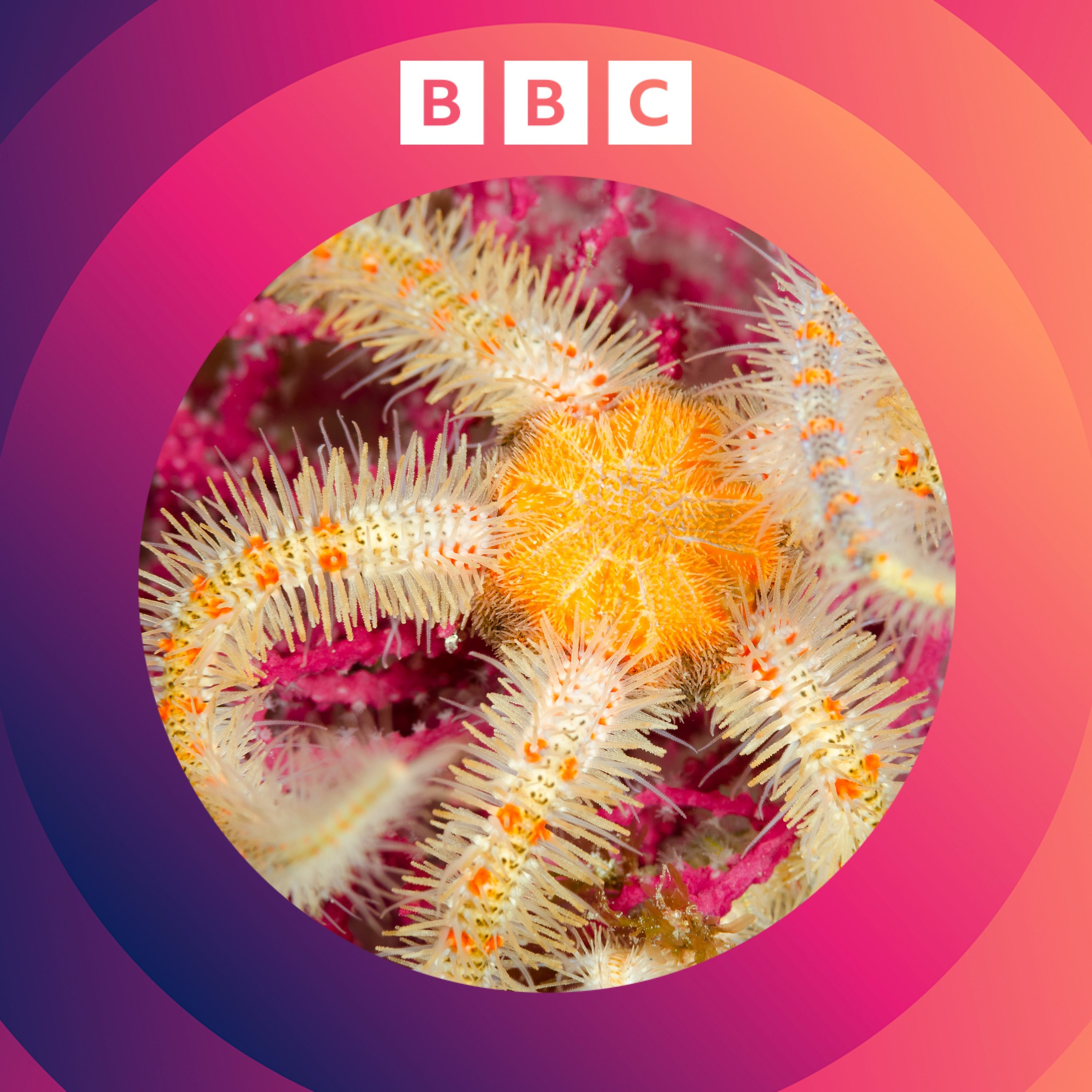
Should we mine the deep ocean?
The Climate QuestionIn the global race for critical minerals - could the seabed provide solutions? Or should we leave these metal-rich environments undisturbed?
Governments and mining companies around the world are on the hunt for the critical minerals we need for the green tech transition. And there’s growing interest in an unlikely source – potato-shaped nodules that are found kilometres below the surface of our oceans.
These polymetallic nodules contain high levels of elements like cobalt, nickel, manganese and copper. Supporters of deep-sea mining say that harvesting them might be less damaging to the environment than mining on land. But many scientists support a moratorium; they say industrial activity on the seabed could damage the biodiversity of a fragile part of our planet.
The BBC’s Climate and Science Reporter Georgina Rannard has been following the deep-sea mining debate for five years. She chats to Hosts Graihagh Jackson and Jordan Dunbar.
Got a question or comment? Email us at theclimatequestion@bbc.com
Production team: Simon Watts, Graihagh Jackson, Diane Richardson, Melanie Stewart-Smith Sound Engineers: Jonny Hall and Tom Brignell Production Coordinator: Brenda Brown Editor: Simon Watts
Picture Credit: Michael Zeigler via Getty Images
Read more

BBC’s climate podcast. A look back at why we are having such a hard time saving our own planet, and how we might change that.
Explore more content:
Nature & Environment A random podcastHow can I listen to other podcasts?
Click here to discover another podcast randomly, or here to browse our categories. Lazy? That's okay, we did some research and selected podcasts just for you.




And what is Podmust?
Podmust is a french project aiming to promote the best podcasts. You can help us by sharing this page (this also helps the podcast, by the way). Thank you! 🙏
Stay informed, the audio way.
Podmust curates what you need to listen.
Discover some of our collections:
our best Business podcastsour best News & Politics podcastsour best Sports & Recreation podcasts.
The Bethlehem Project: Democrats battle over their party’s future
What Next
Has the U.S. lost the war in Iran?
Consider This
Sites Unseen: What’s Revealed by Traveling With the Blind
The Daily
Why Comedians Say Colbert’s Exit is No Joke
CNN One Thing
Why America has more billionaires than ever (From the archives)
Apple News Today
50 Shades of Legal Gray
Norm Eisen, President Obama's "ethics czar" and founder of Democracy Defenders, talks to Alex Wagner about Trump's latest avalanche of corruption: the $1.8 billion slush fund to pay off… Pod Save AmericaWhy so many Americans never learned to swim
In the U.S., roughly 8 in 10 kids from lower-income households grow up with few or no swimming skills — and Black and Latino children lag behind their white peers. Those gaps aren't an… Code SwitchMemphis defined American music. How did it miss out on the money?
The ExcerptIran Says US Deal Not Imminent But Consensus Reached, More
Bloomberg News NowFrom “What Next”: How “Tax the Rich” Went Mainstream
FT News BriefingInflation week takes center stage
Wall Street BreakfastOne Thing: Why Comedians Say Colbert’s Exit is No Joke
CNN 5 ThingsTrump is rolling back climate solutions. What can cities and states do?
Up First
The death penalty returns to Israel
Senior Middle East correspondent Emma Graham-Harrison on a pair of laws recently passed by the Israeli parliament to bring back the death penalty – seemingly only for Palestinians. Help… Today in Focus
Inside the Femosphere: No hook-ups and men must pay
With the manosphere in mainstream, make way for the "femosphere". A movement urging women to rethink love entirely. Less romance and more strategy, no splitting the bill and no… The Story
The Sunday Showdown: Camilla takes on union boss Mick Lynch
Hosted on Acast. See acast.com/privacy for more information. The Daily T
Weight-loss jabs and the NHS: a 'national disgrace'?
If you’re interested in this episode, you may also like 'Take 2: Weight-loss jabs' https://www.bbc.co.uk/sounds/play/m0029yzm Weight-loss injections are not prescribed by the NHS, despite… ScotcastWell, the bad news is: we're French. But the good news is: Podmust curates the world's podcasts so you can focus on staying informed or entertained. And voilà!
© Podmust